

Developer Toolkit
The Developer Guide is the implementation layer of the STRATA Protocol — where the framework's governance principles become concrete templates, workflows, and reference architecture for teams building AI-assisted software. This page previews what the Guide contains, structured around three questions: how the reference platform is built, how features are governed, and how code changes flow through the layers.
Platform Architecture
The STRATA Protocol reference platform — StrataProtocol.org itself — is a Nuxt 4 / Docus SSR application. Four distinct layers handle content, presentation, utilities, and server-side request processing:
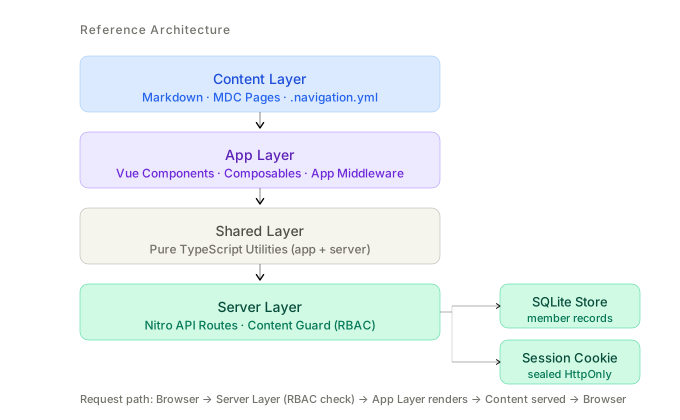
Content lives at the top as Markdown and MDC pages — the source material. The App layer renders content through Vue components and composables, with app middleware enforcing client-side route guards. The Shared layer provides pure TypeScript utilities consumed by both App and Server. The Server layer runs Nitro API routes and the content guard — a server-side RBAC middleware that validates the user's session role before serving protected content.
External state is kept minimal: a SQLite database for member records and a sealed HttpOnly session cookie for authentication. No third-party auth services. No session data exposed to the client.
Governed Delivery Workflow
Every feature on this platform was built using the STRATA governed delivery workflow — the same workflow the Developer Guide documents for practitioners to apply on their own projects. Five stages, each producing a durable governance artifact:
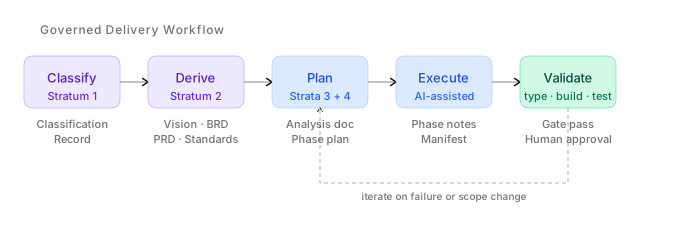
The feedback arrow from Validate to Plan is the key structural feature: this platform does not gate on perfect first-pass delivery. It gates on human approval at each phase boundary. Failures loop back to Plan, the analyst re-examines scope, the AI copilot re-implements, and the gate re-runs. This is the governed delivery loop in practice — and it is self-referential: the loop you are looking at is the loop that built the page you are reading.
Implementation Flow
When a feature is implemented, code changes move through the platform layers in a specific, testable sequence:
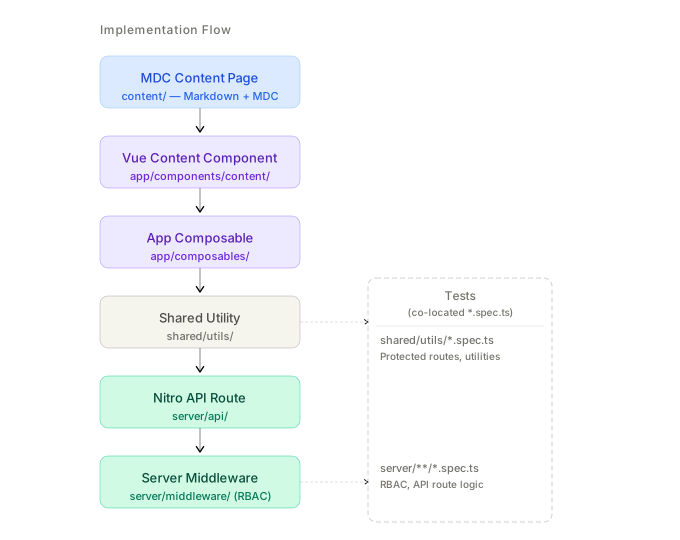
Shallow changes touch only the top layers — a new MDC page or a content component. Deeper changes propagate down through composables and shared utilities to the server. The test lane on the right is structural: co-located *.spec.ts files live at the Shared and Server layers — the two layers where testable logic lives. Content and App layer changes are validated through type-check and build alone.
Available to Members
A member account unlocks the full Developer Guide — practitioner resources for applying this architecture on real projects:
Deep-Dive Documentation
Expanding
The Developer Guide template library is being built incrementally under REQ-006. Current development priorities:
- Nuxt / Docus documentation platform templates — the reference stack shown above
- NestJS / Vue application templates with STRATA governance wired in
- Guided worked examples: one complete project from classification through artifact trail
- Stack-specific authority chain mandates for GitHub Copilot, Cursor, and Claude Code
See the Platform Roadmap for the current build state of each template set.